
With millions of tourists visiting Ireland every single year and heading to the local pubs for the first time, many have plenty of questions as to how everything works.
Questions often include what to wear, what to order, what’s the tipping amount, how do rounds work and what’s the lingo in pubs.
And to help with that, we’ve compiled the answers to the main questions you need to know, and all the unwritten rules that you need need to know before you make a visit to a pub in Dublin, Cork, Galway or anywhere else.
Buying a drink and ’rounds’
Table or bar service? It is not always clear in an Irish pub if the establishment is providing table service or if you need to head to the bar, often it will become clear based on what other people are doing, but a lot of the time, unless stated, you should head to the bar and order away.
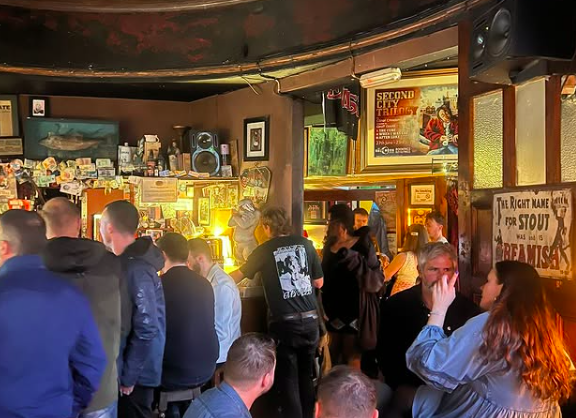
Bar service etiquette: When ordering from the bar, an orderly queue is not usually how it works and you can instead pop yourself in wherever there is a space, the bartender will try and work in order of first come first served. It is common practice to let the bartender know if someone was ahead of you if they come to you first, but as people drink more and places become busier, it does become much more of a free for all.
What are rounds? Rounds are more common in Ireland than they tend to be elsewhere in the world like the US. They are simply where a group of lets say four, take turns in ordering the whole group a drink so that only one person need to go to the bar each time. This is common place and often much easier for both bartender and group.
Tipping and tabs
Do I tip? A tip when ordering a drink or round is not expected in Ireland but is of course appreciated if you have some money and feel the bartender should be rewarded for their service. It would be most common to tip towards the end of your visit rather than along the way, but any tip is appreciated.
Tabs: A tab is generally more so reserved for a regular or maybe a big group but you can always ask if you can open up a tab when you get in there.
What to wear
Is there a dress code? Generally speaking, and of course there are exceptions, there is no dress code when it comes to visiting your standard Irish pub. The majority of people will be in there in jeans/trousers and a t-shirt/shirt/top, or casual dress or the likes, but you can really dress as you please. Obviously being too casual can be an issue, and some pubs in cities and towns that are more upmarket might not allow you in tracksuit pants or similar.
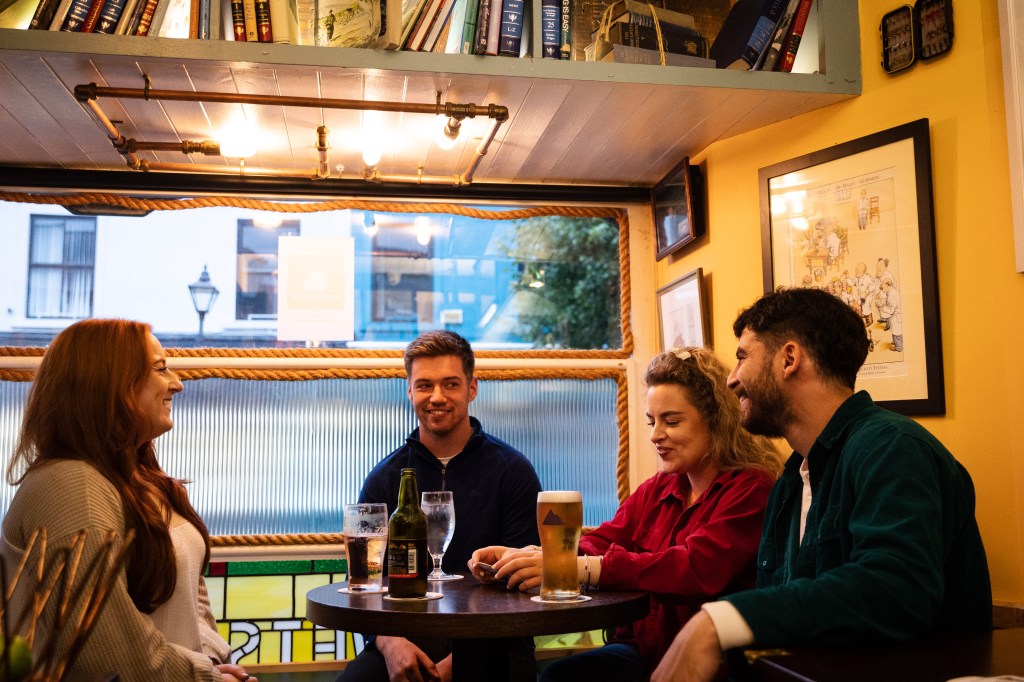
Adjust based on where you’re going: If you’re heading to a small local pub in rural Ireland on a Saturday afternoon, the likelihood is that people will be extremely casual, so heading in with heels and a fancy dress will probably stand out – that’s not to say you can’t wear exactly what you like – but if you want to blend in, this probably isn’t the choice. However if you’re going out in Dublin at 7pm on a weekend night, people will be much more dressy.
Where to sit
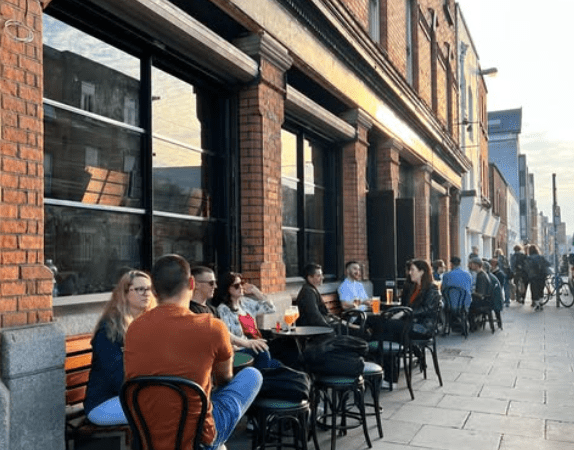
Sit or stand? This decision can be based on the pub and how busy it is, but in most pubs, you are welcome to stand at the bar, stand in the floor or pretty much stand anywhere if the establishment is busy. When it comes to sitting, if there are seats available, unless they say reserved on them, you’re usually more than welcome to take them.
Sharing a table? In a busy pub, if there’s room beside a group at the end of the table, you are well within your right to just ask if there’s anyone sitting there and if you can nab it, if they aren’t expecting anyone else, people are usually more than happy to allow it.
Closing times
Last orders: About half an hour before closing, the bartender will usually signal last orders which means you have a final chance to order a drink before they cease serving, you will be expected to finish this promptly when the actual closing time arrives.
I don’t drink, what do I do?
Zero-alcohol options: Don’t worry, not drinking is perfectly normal and allowed in Irish pubs, in fact, zero-alcohol options have exploded in recent years and almost all companies now have their own alcohol free versions of their drinks. You can enjoy a pint of Guinness zero, get that picture and taste almost exactly what the real thing is like, without any alcohol. However, these options are just as expensive as the real thing.

Water or minerals: All pubs will serve water in a bottle or on tap and have a slew of other drinking options like coca-cola, fanta orange, sprite/7up and the likes, which are common to order.
Hot drinks: Most pubs too will happily serve tea or coffee, if it’s not on the menu you can always ask and the bartender will be happy to explain what’s on offer.
Food: A lot of pubs now have fully fledged food menus, but even if they don’t, you can guarantee they’ll have the common snacks like Tayto crisps, bacon fries and some chocolate bars.
Guinness rules
The two-pour: If you are ordering a Guinness, which is customary as a tourist in Ireland, the bartender will fill the glass in two pours, so if you see it not quite full, don’t go and grab it as it isn’t ready just yet. The bartender will hand it to you or push it towards you when it’s ready to be taken.
It’ll take a little longer: With the two-pour, the bartender gives it time to settle before topping it up, so it’s going to take a bit longer than other drinks to be ready, so if you have orders, you’re best to drop them to your table and come back rather than waiting impatiently.
Leave it settle: It’s best to leave the pint settle for about a minute before taking a gulp, there’s no rush so just take your time and you’ll enjoy it that bit more.
Live music
Be respectful: If you’re in a pub where music is being played, it’s often appreciated to give your attention to the musician and not to make a racket that would distract all others from the performer. Applause between songs too is always welcomed.
What not to do
Don’t cause a scene: If you walk into a somewhat quiet local pub, causing a racket is probably not going to be welcomed, know your surroundings and act accordingly. Plenty of pubs are full of music and places to dance and sing, so keep that behaviour for those places.
Make stereotypical references: Asking in pubs about leprechauns is not likely to endear you to the locals, so keep those kind of references to yourself when in an Irish pub.
Anything else?
Is there any other obvious things we should add to the list that you’ve experienced in a pub as a bartender or as a patron? Please let us know in the comments below.
 The Irish Pub Guide
Leave a comment